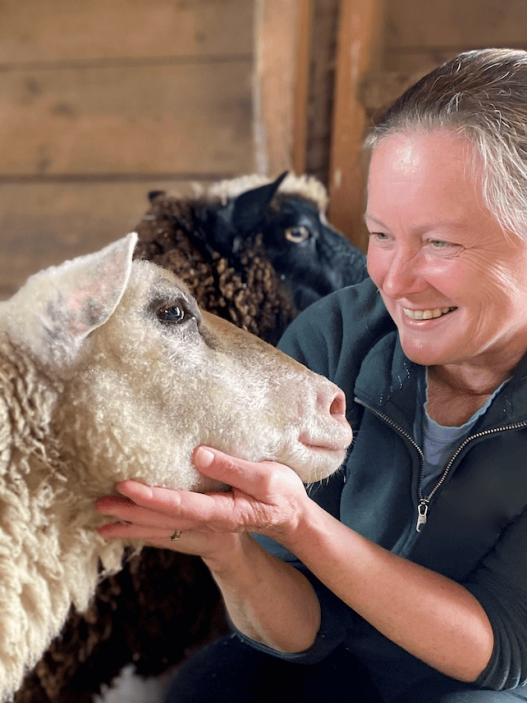

Heidi Fishbein is a faith-informed ADHD Coach, author, speaker, and ADHD advocate. Her practice is focused on empowering women, parents, and coaches to understand their unique brains while building sustainable systems that actually work. Blending neuroscience, professional coaching, and compassionate structure, she guides clients from overwhelm and self-doubt toward clarity, confidence, and purposeful action.
Business Name: Heidi Fishbein Life Coaching
Location: International (based in Ontario, Canada)
Connect: Website | Instagram | Facebook | LinkedIn
Tell us about your journey as a coach.
I came to coaching through my family’s ADHD journey. Like many parents, I spent years trying strategies, systems, and advice that never quite fit the reality of our daily life. When I personally experienced coaching, everything shifted. For the first time, I wasn’t being told what to do. I felt seen and understood while being invited and empowered to think differently. I knew immediately this was the work I was meant to do.
I began coaching in 2018 and have since coached hundreds of clients, including adults, women, parents, and families navigating ADHD. Coaching transformed not only my professional direction, but my parenting, relationships, faith, and confidence.
Today, I am proud to serve as an ADHD Coach, mentor coach, and coach educator, helping both clients and coaches understand the ADHD brain through a strengths-based, whole-person lens. My work blends neuroscience, professional coaching, and compassionate structure so people can move from shame and overwhelm into clarity and sustainable change.
More than anything, my journey has shown me that coaching doesn’t just solve problems, it creates the space where people can finally begin to see, understand, and love themselves.
If you feel inclined, please share any relevant revenue figures from your business.
Rather than specific numbers, I love using this conversation to shift how coaches think about money. In my experience, income in coaching is less about tactics and more about mindset. Many coaches undercharge not because of market reality, but because of internal beliefs about worth, value, helping, and giving yourself the permission to succeed.
My own annual income has grown exponentially over the years as I’ve intentionally worked on my mindset around value, sustainability, and what service means to me. When coaches begin to see their work as providing meaningful transformation rather than “just a conversation,” their pricing naturally aligns with the value they provide. I’ve watched coaches build sustainable businesses once they understand what’s possible and allow themselves to charge accordingly.
Interestingly, clients often experience deeper commitment and stronger outcomes when they make a real investment in themselves.
Money conversations in coaching are part of the work. We can’t avoid them. I find they’re less about ego or profit and more about sustainability, confidence, and the ability to keep serving well. The way we think about money often determines whether we get to continue doing the work we care so deeply about. When a coach truly believes in the value they bring, they show up with more clarity and steadiness. And when clients invest in themselves, they tend to engage with that same level of commitment.
What worked best for you to find and attract clients in the early days?
In my early days as a coach, what helped me most was getting really clear on how to talk about who I am and what I do. Not a complicated pitch with “coaching jargon.” l worked (and practiced over and over) on having a natural 30-second, 60-second, and 3-minute way of explaining coaching and how I support people so I could share it comfortably in everyday life.

The more confident I became talking about it, the more opportunities naturally appeared. Clients don’t only come from marketing funnels, they come from real conversations at the park, the soccer pitch, the grocery store, the airport, and everywhere in between.
When you can clearly and comfortably share your work in normal conversation, you stop trying to “find” clients and start becoming someone people remember, ask about, and refer to.
How did you decide on your niche, or what would you say to someone who’s struggling to choose one?
Most coaches feel a lot of pressure to choose the “perfect” niche right away, but in my experience, your niche is something you discover by coaching, not something you decide in advance.
Early on, it helps to work with a variety of people and pay attention to patterns, such as who in your calendar you feel most energized by, the clients you genuinely look forward to each week, and the conversations that stay with you afterward. As you begin to narrow, something really helpful begins to happen: your marketing becomes clearer because you know exactly who you’re speaking to when you write a post or share an idea. My own path developed this way. I started coaching because ADHD was part of my family’s life, and my faith was central to how I understood growth. So over time, I realized I was most drawn to supporting families navigating ADHD and disability within a faith-centered framework. I didn’t begin with that clarity…I coached my way into it.
For coaches experiencing “niche drama,” I encourage treating it as a working niche by coaching a range of people, tracking where your energy is highest after sessions, noticing repeating problems you naturally understand, and paying attention to who refers others to you. Many coaches cast a wide net at first and then narrow it based on real experience, and that’s actually the healthiest way to do it. A niche isn’t about excluding people. It’s about focusing your heart so the right people can recognize you.
What training or certifications, if any, made the biggest difference in your career?
For me, the biggest difference in my career came from completing an International Coaching Federation (ICF) accredited training so I could pursue and earn my ICF credentials. That foundation didn’t just teach me tools, it shaped how I think, listen, and show up as a coach, and it gave credibility and structure to my work.
Beyond the certification itself, staying actively connected to growth spaces has been just as important. I regularly participate in coaching groups, masterminds, and ongoing training. Several times a month, I’m engaging in coaching communities that stretch my perspective and bring me back to the core coaching skills and behaviors. I really can’t emphasize this enough that coaching isn’t a profession you finish learning. Mentoring, supervision, and continued development spaces have been essential to refining my presence and deepening my impact, and I believe every coach needs some form of ongoing learning and reflective support to continue growing.
Sometimes coaching can feel like a lonely profession once training ends and you’re coaching and building a business on your own, which is why there is so much strength in community. Staying connected with other coach practitioners allows us to learn from one another and remain supported in the work we do.
Do you recommend offering free sessions, and if so, how should new coaches approach that?
Personally, I don’t offer free coaching sessions in my practice. Instead, I offer a limited scholarship opportunity. This is something I co-create with someone after a free consultation (20 minutes) when it’s clear there’s a strong fit and the only real barrier to them pursuing the growth is the financial commitment. The scholarship allows them to pay an amount that is truly workable for their situation while still making a meaningful investment in themselves.
I’ve found this creates a very different dynamic than fully free or ongoing pro bono sessions. When someone has some skin in the game, they tend to show up more consistently, engage more deeply in the process, and follow through on the work between sessions. Coaching asks a lot of the client—reflection, action, and willingness to stretch—and the financial investment often supports commitment. In contrast, when I previously offered regular free sessions, attendance and follow-through were typically lower, and the overall impact was reduced.
So rather than removing the investment entirely, I try to remove the barrier while preserving ownership. The scholarship approach honors accessibility while still supporting the client’s dedication to the work and the transformation they’re seeking.
If you had to choose three must-have tools for your business, what would they be and why?
If I had to choose three must-have tools when you’re just starting your coaching business, the first would be a calendar booking software. You need an easy, professional way for someone to schedule a consultation the moment they’re interested. A direct link you can send right away removes friction, automatically handles time-zone differences, and allows you to pre-plan your week by only opening the times you’re actually available. It keeps things simple for both you and the potential client and greatly increases the chances they’ll follow through.
The second is a system for collecting emails and first names. The platform I use is Kit, which has a strong free option and lets you start building a list right away. In the coaching industry, your email list really is currency. Whether you want to be on podcasts, summits, webinars, or speaking events, you’ll often be asked how many people you can reach. More importantly, it gives you a direct relationship with people who already care about your work.
The third is a high-quality giveaway (sometimes called a premium freebie or opt-in). This is simply a valuable resource you offer in exchange for someone’s name and email. For example, this giveaway could be a tip sheet, a guide, or a short ebook relevant to your niche. It serves as both value and an introduction to your coaching. They receive help, and you begin building connections. Over time, that list becomes the group you invite to coaching opportunities, programs, presentations, and future offers. The sooner you begin building it, the stronger your business foundation becomes.

The Life Coach Magazine staff is your team for high-quality content on topics from personal development, to coaching tips, to how to grow your coaching business.