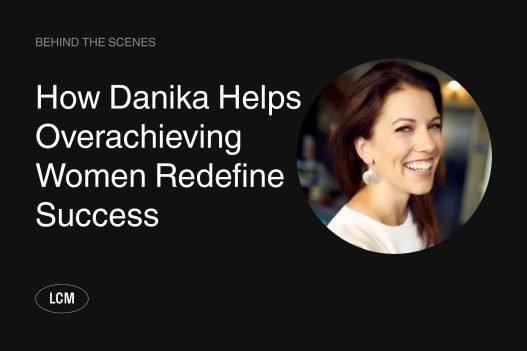
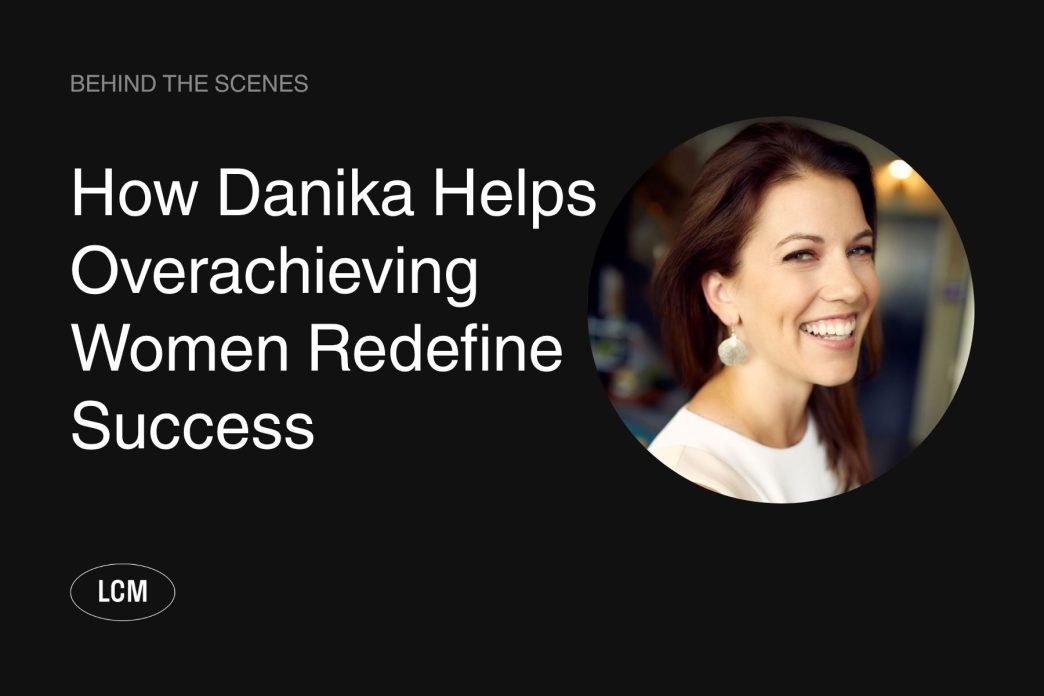
Danika Zoe is a professional executive and leadership coach with over a decade of experience helping clients build values-aligned and future-ready goals. Known for challenging conventional narratives around success, productivity, and well-being, Danika is on track to achieve her Master Certified Coach credential with the International Coaching Federation.
Business Name: Danika Zoe Coaching and Consulting
Location: Toronto, Canada
Tell us about your journey as a coach.
I started coaching in 2013, still in my 20’s and completely unaware of the personal and professional journey that this career would take me on. In the beginning, I was very active in my local coaching community in Toronto and held monthly meetups to grow my business and expand my reach. As I worked through my certification and coaching leadership programs, I spent the better part of a year as a digital nomad, building my practice.
After that, I began working in the corporate world, hosting workshops and seminars, before adding change management consulting to my skills in 2018. Since then, I’ve been helping organizations and executives manage change, make important decisions, and grow leadership capabilities.
What worked best for you to find and attract clients in the early days?
Human connection is the most important piece of finding new clients. Taking time and care to make sure people understand your work and how you can help them transform their lives is key. People will refer their friends and loved ones to you if they trust you and understand how you can help. Something that worked really well for me was holding a workshop to showcase my style and my ability to make real change happen for my clients.
How did you decide on your niche, or what would you say to someone who’s struggling to choose one?
I went to many networking events at the beginning, and even though I didn’t necessarily love going, I would end up speaking to a certain kind of woman many times. An “over-achieving superwoman” type. It was when, at one of these events, an overachieving superwoman clutched my arm and said, “Oh my gosh, I really need your help and support,” that I understood this was the best niche for me.
What training or certifications, if any, made the biggest difference in your career?
I’ve taken a lot of training courses and certifications over the years. The most influential one, which helped me to become an excellent facilitator and a great leader, was CTI‘s leadership program. It’s a 10-month program with four in-person retreats, and it really changed the way that I viewed my connections with others and the way that I project authentic leadership. I learned incredible things that I would not have learned otherwise, and I would really recommend that you take the leap into this program if that’s something that you’re looking for yourself.
How did you set your initial pricing, and what did you learn about raising rates?
I set my initial pricing to reflect what I was seeing around me. If you’re focusing on a business-to-customer model where you’re finding individual clients, then you really have to understand that people have budgets and you have to be flexible and accessible.
…with a corporate structure, things are a bit different. They may offer you a reduced rate to work with them. If a company is finding clients for you, then don’t forget they’re doing a lot of the business development and sales that you would need to focus your time on otherwise. So, a reduced rate in exchange for that support may be worthwhile.
Do you recommend offering free sessions? If so, how should new coaches approach that?
In the beginning, I think it’s really important that people see how you coach and whether the connection is a right fit for the two of you. It really is like dating, so you have to understand if the chemistry is there or not.
I would say that if you’re not offering free coaching at the beginning or a discovery session where that person can get to know you, then you definitely should be posting snippets of your coaching online so people can see and understand what it is that they’re actually getting when they’re working with you.
What helped you build confidence and/or overcome imposter syndrome when you were just starting?
The first six months were really hard, where imposter syndrome is concerned. I struggled a lot with it until my clients actually came back to me, excited, talking about the impact I had had in their lives, and the changes they had made in their lives as a result of our work together. It took about six months of blind faith before my confidence actually caught up with what I was doing, and I was able to confirm that what I was doing was working.
What beliefs about coaching or business were most helpful as you grew your coaching practice?
I think the biggest lesson to learn was that I didn’t have to always derive 100% of my income from coaching for it to count as a success. I definitely hopped in and out of other roles as I was building my business. I took entrepreneurial breaks, and ultimately, I decided the full-time entrepreneurship journey was not for me.
So when I decided to get into consulting, I was able to craft a level of stability and security that really calmed my nervous system. I was able to help my coaching clients differently because I wasn’t feeling as insecure monetarily, and I could really help them take leaps and challenge them without being worried that they were going to fire me.
What’s your favorite coaching exercise or tool to use with clients—and why?
This is a really hard one because I have so many great tools that I love a lot, but I think the most valuable things that I’ve been doing with my clients right now come from a book called Designing Your Life by Bill Burnett & Dave Evans. I took the Designing Your Life coaching certification program because I was so intrigued by these tools. I think doing a set of plans where you decide what your life Odyssey is going to be and work out your vision and your manifesto for both your work life and your home life, is a really important start.
I also think that a traditional wheel of life exercise, when you start coaching, is very valuable because it helps you create a rating or an understanding of your level of satisfaction in each area of your life. It gives you a way to start measuring where you want to go or what level you want to be at in each area of your life.
If you had to choose three must-have tools for your business, what would they be and why?
I really struggle with this because I don’t necessarily think that this is the place where you should be spending a lot of time at the beginning of your business. I’d recommend you choose tools that are free and easy to use, something like the Google Suite is totally fine when you’re starting. Your tools don’t need to be fancy, and you don’t need to pay a lot. You don’t need a funnel. You really need to be out in front of people, talking to them about what you do and making sure that they’re getting some coaching.
The one tool that I have spent a lot of time and energy investing in is Notion. I do hold a whole personal knowledge sector there, inspired by another book that I love – Building a Second Brain by Tiago Forte – so that I can organize my thoughts, organize my clients, organize my templates, etc. If you don’t mind a little bit of a learning curve and a big blank slate to put your entrepreneurial dreams onto, I really recommend Notion.
How do you structure your sessions or packages for clients?
Structure is something that is very personal. I hold a lot of structure in the first two sessions. It’s very important to me that my clients and I answer three questions when we start working together.
- Who am I?
- What do I want?
- What’s holding me back from getting that?
In those first two sessions, I explore values, goals, and those negative voices in your head that may be unconsciously holding you back. After those first two sessions, I tend to like to work with somebody for at least 3 to 6 months. Change takes time; you’re not gonna see results overnight. It’s best if we see each other about twice a month. That said, I understand life happens, and people may need more or less time depending on the urgency of their goals.
What’s best is to have a very structured onboarding system where the client understands what they’re getting, and then a really free-flowing back and forth after that, so you can address each goal in each issue as it comes up. The client is really in charge of that coaching, not you.
What does your day-to-day look like now compared to when you were starting?
My day today is very different. I have ADHD, so when I was starting to coach and beginning my entrepreneurial journey, I spent a lot of time wondering what was wrong with me. Why couldn’t I get down to the work I needed to do? When I started to learn about executive function and different types of things that plague people with ADHD in their work, I started creating different structures for myself.
One thing that works really well for me is body doubling or working with a buddy so even if I don’t have someone there to help me stay on track, I might put a YouTube video on where other people are working or I might go to an environment where other people are working because that really helps me and my body to stay on track with my consulting.
I follow a very corporate structure, but that doesn’t mean that I can’t still find time during the day to take walks, take breaks, make myself healthy food, and I don’t necessarily adhere to a very strict schedule. I’m always listening to what my body needs and how much energy I have for that day. It’s a constant adjustment to make sure that I have what I need in my body, mind, and soul to get the work done.
How do you keep growing as a coach?
Growing as a coach is very important to me. There have been times of extreme growth working with both my own coach and a therapist. I also saw growth through different programs like the CTI leadership program or my Design Your Life certification. It’s important to stop and take stock of what you’ve already learned and make sure you are putting those learnings into practice.
Time off is important too. I took almost 2 years off from any learning, but this past September, I started my Master Coach Certification. I chose to do a Master Coach Certification program where I study with different peers. It’s called the Advanced Coaching Practicum. In this program, I get to study with other people, which is very important to me. Finding a community of master coaches who really want to nerd out about the nuances of coaching and ways to maximize our skills is amazing. It feels almost like a graduate program where I’m immersed with other people who are obsessed with this journey, just like me. I find that that’s very valuable.
I may take another break after completing my Master Coach Certification. It’s been something that I’ve been working on for 10 years, and I feel that when I do achieve it, it will be something that needs proper celebration and time to integrate what I learn before I look for further training.
Is there a book, podcast, or resource you recommend for other coaches?
I really recommend Megan Jo Wilson’s Who The F*ck Am I To Be A Coach?!
How has your approach to coaching evolved since you started?
Over the years, I moved from being somebody who took on a lot of my clients’ pain with more empathy than I needed to – to somebody who was able to keep those feelings separate, being able to empathize and understand what my client is going through, without taking it on myself. This is an energetic journey, so you have to understand how to do that energetic work inside of your own body so that you’re not absorbing the energy of your clients.
What’s one piece of advice you wish you had when you were brand-new?
I would have encouraged myself to go for it even harder than I did. I would’ve reminded myself that nobody is watching me. Nobody is judging me, and nobody is judging my moves.
So, I would’ve encouraged myself to be 10 times as loud as I was and maybe ride the Internet coaching wave more than I did. Much of my work was in person, and understanding the technical side and the technology of coaching better would’ve propelled my business even further in those early days.
Is there something you thought was really important as a new coach, but later realized wasn’t?
Your tech stack. Shut up about your tech stack. Just get online and start coaching. Coach as many people as you can. If you want to give it away for free, give it away for free, but make sure people are talking about it afterward.
Make sure that you’re collecting testimonials, and make sure that you’re comfortable with sales. That is the most important skill that you’re gonna learn, aside from being a really great coach, is how to sell without feeling achy. Just keep on going until you get over that initial discomfort and keep working through that initial discomfort of saying, ” Hey, I have something to sell. Do you want it?”
People can take it. People will understand, and you must communicate what it is that you do in a compelling way. So please, please continue to grow your sales capability. The technology you’re using doesn’t matter. What your website looks like doesn’t matter; what people remember is how you made them feel and what you helped them accomplish.
What’s one lesson you wish you had learned earlier in your coaching career?
Nobody is looking at you. Nobody is watching you as closely as you think they are. Just keep on doing what you do…
Make sure that you’re out there in the wild, coaching, talking about what you do. Don’t look at what other people are doing online. I would even say unfollow every single coach that you follow online. They are not your clients, so stop trying to look at what they’re doing and stop comparing their year 10 to your year one.
If you could give one piece of advice to every coach reading this, what would it be?
Stop comparing yourself to other coaches.
Stop comparing yourself to other coaches.
Stop comparing yourself to other coaches.
Learn real entrepreneurial business-building skills like sales, marketing, and business development. Those are the most important rudimentary things that you can learn as a beginning coach.
I’m sure your coaching is just fine, but if you can’t master the basics of having an operational business, then you are not going to succeed.
Anything else you’d like to add?
It’s a journey. It’s a marathon. It’s not a sprint.
So, you have to learn to rest. You have to learn to take breaks. You have to learn to be kind to yourself.
Those are the most important things. If you really want a sustainable long-term coaching practice, then you’re gonna have to nail some of the stuff for yourself. You really have to understand that this is the greatest personal development journey you’re ever going to be on as an entrepreneur, and it’s never going to stop.
It is going to be relentless, so you have to understand those ups and downs and start to ride the wave of that roller coaster and enjoy yourself along the way.

The Life Coach Magazine staff is your team for high-quality content on topics from personal development, to coaching tips, to how to grow your coaching business.